from $900
Process automation
A manual task repeated every day costs money — the invoice just never arrives. Moving data between systems, reconciling spreadsheets, sending notifications, pulling reports: it feels like “ten minutes”, and over a year it is weeks of work. We take that work off a person and hand it to a computer.
First we check whether it pays off
Not every task is worth automating. A rare, cheap, or about-to-change one is cheaper left to a human. So the first step is free: you describe the process, we say what comes off the person and what does not, and how long it takes to pay back. You can estimate the order of magnitude yourself with the manual task cost calculator.
What we automate
Collecting data from several sources into one place. Processing by rules that today live in someone’s head. Notifications on events — to a messenger or email. Scheduled reports. Connecting systems that do not talk to each other (that is a separate service — integrations).
Built not to lose data silently
Automation that occasionally fires twice or quietly skips a record is worse than manual work: the error is noticed a month later. So a repeated request does not create a duplicate, a network glitch does not turn into “not sent”, and every operation leaves a trail showing what went through and what did not. That is not “a bit more expensive” — it is the difference between a working tool and a source of problems.
What stays with the person
Automation rarely removes a task completely. What stays is handling exceptions — whatever the rules did not cover — and supervision. We name that boundary up front rather than promising “a hundred percent”.
We work in stages: you see the result first, then pay for it. Source code and access stay with you — you can leave at any point.
Proven in
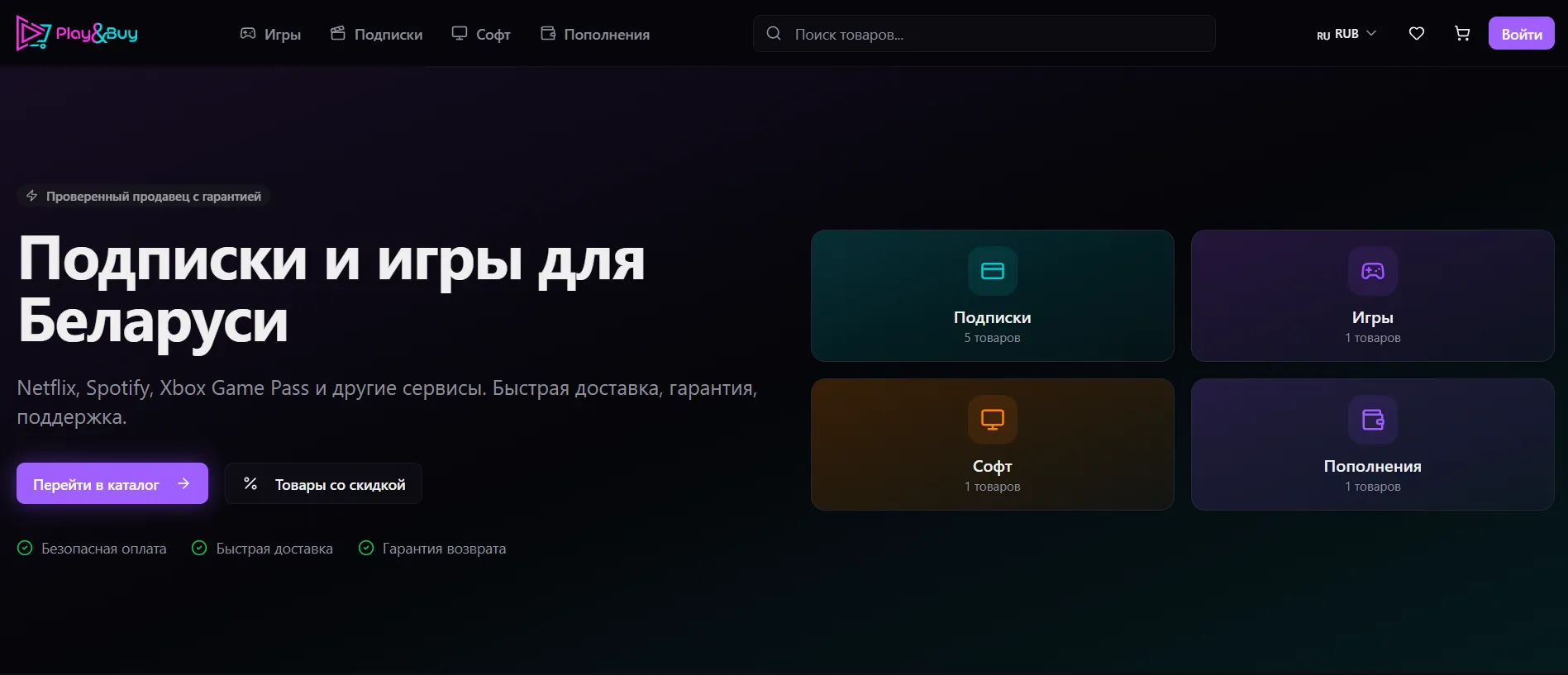
01Studio product
Play&Buy
A store for foreign subscriptions and games in Belarus: catalogue, orders, encrypted keys, central-bank rates and a fifteen-section admin.
02Engineering case
Order dispatch with debt accounting
Orders for hired workers: dispatch, statuses, disputes and payout maths. One file, the standard library and a single external dependency.